How to Get Started with Immersion Cooling for the Data Centre
Practical advice, system specifications, and how you can test immersion cooling today
Scott Constable, Alliances Director at Vespertec
If you’ve been following along with our Durham University series, you’ll know by now how immersion cooling works and how we helped Durham get its first tank up and running. What we haven’t covered yet is the question I get asked most often: “That’s all very well, but how do I actually get started?”
This piece is the practical answer to that question.
Table of contents
- Is Immersion Cooling Right for My Environment?
- Can I Trial Immersion Cooling Within My Existing Data Centre?
- What Infrastructure Do I Need for Immersion Cooling?
- What Hardware is Compatible with Immersion Cooling?
- What Does a Sensible First Immersion Deployment Look Like?
- What Does Day-to-day Operation and Maintenance Involve?
- How Do I Get Started with Immersion Cooling? Practical First Steps
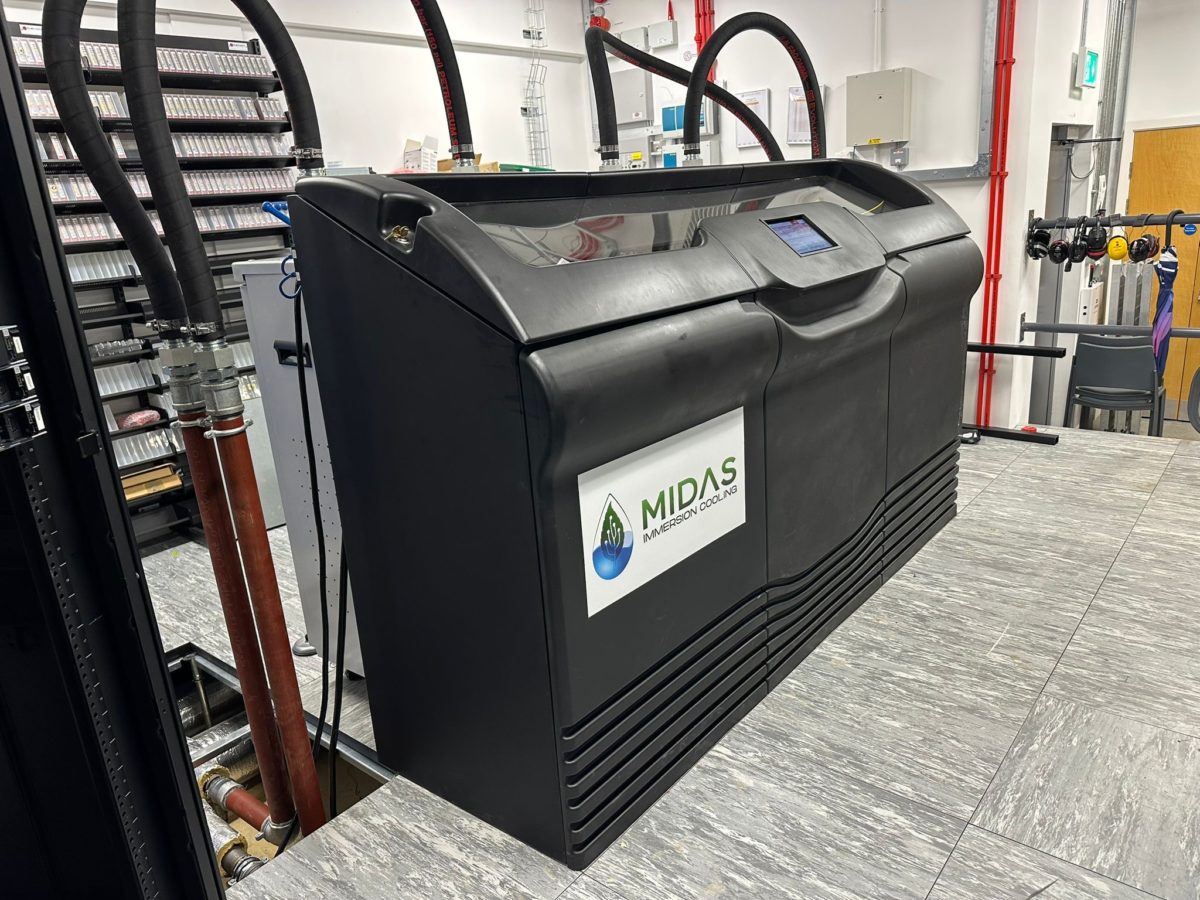
Figure 1: A 50U Midas XCI Immersion Cooling Tank Installed in Durham University’s DiRAC High Performance Computing Facility.
Is Immersion Cooling Right for My Environment?
“But is immersion cooling right for me? Do I need it?”
The honest answer to both those questions is: maybe. But if you don’t investigate it now, you might find you need it later and wish you’d started learning sooner.
There are a few key factors worth thinking through:
- Power density. Are you running high-density clusters with a large power draw? Do you plan to expand or build out new clusters over the next few years, and do you expect your power envelope to grow with them?
- Space constraints. Do you need to fit more compute into the same footprint? If a new facility isn’t in the budget, are you being asked to do more with what you already have?
- Heat management. Can your facility handle the heat your equipment generates? Are you already seeing signs of heat stress at the component level?
- Power costs. Are energy bills becoming a problem? Would better efficiency help offset CapEx on new hardware?
- Component lifespan. Are heat-related failures eating into your maintenance time? If you’re running 24/7, high-load jobs, longer component lifecycles could make a real difference.
- Sustainability goals. This one comes up a lot in conversations we have. Do you have ESG targets to meet? Would measurable improvements in energy efficiency help you secure grants, funding, or sign-off on future projects?
Even if immersion isn’t the right fit, there are other forms of liquid cooling that might help – DLC in particular. Read our sitdown with Lenovo, one of the leading providers of DLC-cooled systems, to find out how you can trial that approach instead.
Can I Trial Immersion Cooling Within My Existing Data Centre?
The short answer is: it depends. Some facilities are already closer to immersion-ready than their teams realise. Others might need a few modest adjustments. Either way, it’s usually more achievable than people expect.
If you don’t have much spare chilled-water capacity, a pump or loop adjustment is often enough. You don’t need to rip out and refit the whole system. If floor loading is a concern, you can reinforce a single localised point rather than rebuilding the room. And if getting power to the right spot is the issue, you only need to solve it for one location to start. If immersion works in your data centre’s context, the investment will usually pay for itself.
What Infrastructure Do I Need for Immersion Cooling?
This is the big question. To get started with immersion cooling, you need a few key things in place:
- A chilled-water loop with enough spare flow and thermal capacity to meet immersion’s requirements. It doesn’t need to be as cold as a traditional air-cooling loop (six degrees Celsius) but it does need to be stable, with a reliable flow rate.
- Power delivery to a small footprint. Instead of distributing 50 kW across five racks, for example, you might be delivering the same amount of power to a single tank. Account for that kind of concentration in your plans.
- Floor loading tolerance for a filled unit. A filled 50U tank like the Midas XCI can weigh over 1.5 tonnes.
- Basic monitoring (e.g. SNMP). With the right monitoring in place, you’re not left biting your fingernails and wondering whether your tank will spring a leak. You can track temperature, flow, and other key metrics remotely, with alerts built in.
- Space for a tank, plus servicing clearance. It sounds obvious, but you’d rather know before installation than after! You need enough clearance above the tank for a winch, and behind the tank to reach the back panel, n order to insert, remove, and service components. If depth is an issue, some tanks (like the Midas XCI 25U) have a side-mounted CDU, which allows for easier access but increases the footprint per kW.
What Hardware is Most Compatible with Immersion Cooling?
The Open Compute Project (OCP)’s Design Guidelines for Immersion-Cooled IT Equipment guidance is a good starting point here. In short, most standard 19-inch rack-mounted servers can be made compatible. You’ll need to remove or adjust certain components and apply the Thermal Interface Material (TIM) between CPU and heatsink, but the list of incompatible hardware is shorter than most people assume.
Common components like GPUs and CPUs are typically compatible. Dielectric fluid behaves very differently from water, so the risk of electrical failure is much lower than it might seem.
The one thing you must do, however, is remove the fan from any server you plan to immerse. Beyond that, you’ll need fluid-compatible cables and connectors.
Storage is where it gets a little more involved. Some HDDs have venting mechanisms that don’t play well with immersion fluid. SSDs are generally more straightforward, but we’d still recommend having your specific components validated before you commit. To help you do that, most immersion fluid vendors carry an HCL (Hardware Compatibility List), which documents products that have they’ve tested and validated with their fluid, or which customers are already using in production.

Figure 2: Image of a server being installed into a rack inside a data centre.
What Does a Sensible First Immersion Deployment Look Like?
The first and most important point is that no two deployments will look exactly the same. And they shouldn’t; your individual set-up should reflect your environment, your workloads, and your in-house capabilities. That said, there are a few bare-minimum elements that any sensible first deployment ought to include:
- A single, self-contained tank (such as the Midas 50U XCI).
- A proven dielectric fluid (such as Valvoline’s).
- Testing against the workloads you actually intend to run under immersion.
- Integration with your existing infrastructure (as with Durham’s 2-inch dry disconnects).
- Built-in redundancy.
- Stress testing before going live.
- Wraparound, post-deployment support from your partner.
For a real-world example of what this looks like from start to finish, read how Durham University planned and executed its first immersion deployment.
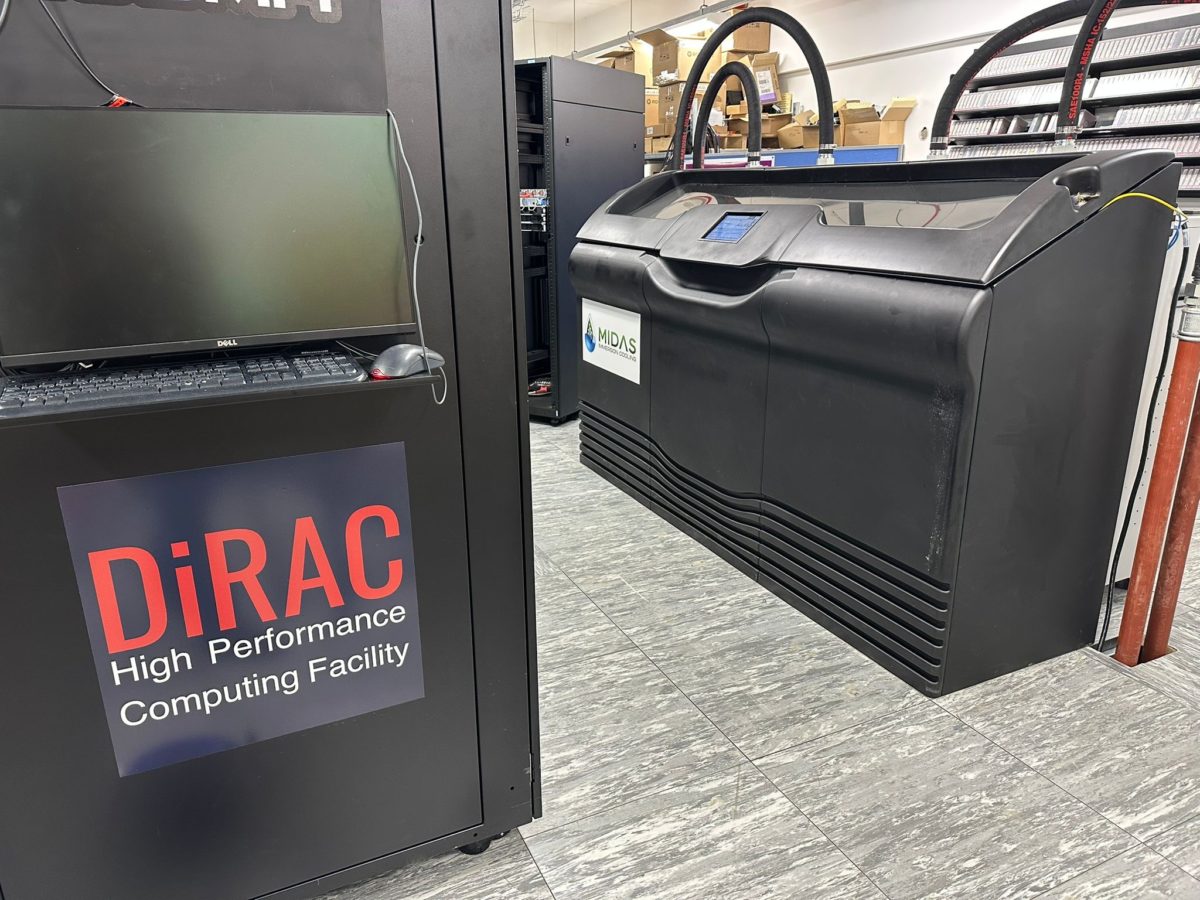
Figure 3: The 50U Midas XCI Immersion Cooling Tank Installed in Durham’s DiRAC High Performance Computing Facility.
What Does Day-to-day Operation and Maintenance Involve?
This process is less difficult than you might think. Ongoing monitoring of temperature and flow can be handled via standard SNMP, and periodic fluid testing – sending a sample to a lab to check for contamination – is straightforward once you have a process in place.
The area that probably deserves the most attention is hardware servicing. On the plus side, there are no fans, and therefore no dust. The trade-off is that you’re working with oil: drip trays, PPE, and an adjusted servicing process are all part of the picture. It’s not complicated, but it is different from what most teams are used to.
If that’s a concern, the best thing you can do is speak to a partner who’s done it before. A conversation is usually enough to make it feel much more manageable.
How Do I Get Started with Immersion Cooling? Practical First Steps
Here’s a checklist to help you assess where you stand against the minimum requirements for a first immersion pilot:
- Do we have spare chilled-water capacity with stable flow to support a single tank?
- Can we deliver the required power to one concentrated footprint?
- Is our floor rated for a ~1.5–2 tonne filled tank; if not, can it be reinforced locally?
- Do we have physical space and service clearance for installation and ongoing maintenance?
- Have we identified a small, high-density workload suitable for a pilot?
- Do we have monitoring in place (or planned) for temperature, flow, and alerts?
- Have we spoken to a partner who can validate hardware compatibility and support the first deployment?
For a case study of an immersion cooling system in practice, read how Durham University is trialling immersion in its Living Lab.
For more information or to set up a free, no-stakes discussion about your needs, your set-up, and how you can get started with immersion cooling, get in touch now.
