

Open Compute Project
The Open Compute Project (OCP) was founded by Meta, then called Facebook, in 2011 as a way to rethink how data centre infrastructure was designed, deployed and operated at hyperscale.
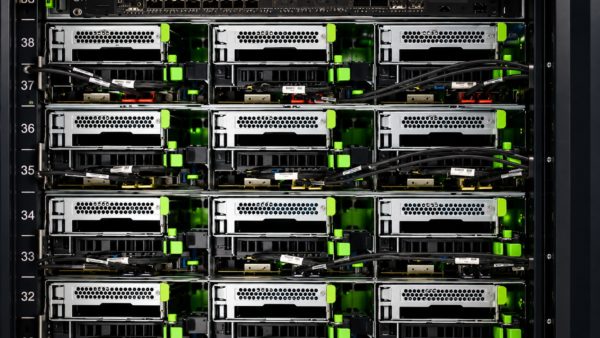
Rather than accepting the limitations of traditional hardware, the project brought together operators, manufacturers and engineers to create more efficient approaches to designs for servers, networking, power and cooling.
Many of the ideas pioneered through OCP continue to influence modern infrastructure today, from next-generation liquid cooling and rack-scale power distribution through to the AI-ready architectures now being adopted across the industry.
Our Journey with OCP
Vespertec has been an active member of the Open Compute community for more than a decade.
Our early work with OCP introduced us to a different way of thinking about infrastructure: open architectures, disaggregated hardware, operational efficiency and large-scale deployment models.
That experience helped shape our approach to infrastructure design and played an important role in our move beyond traditional OEM environments into the wider world of open systems, AI infrastructure and hyperscale technologies.

From hyperscale concepts to real-world deployments
Traditional OCP platforms were originally designed for organisations operating at enormous scale.
That meant many early deployments were concentrated within hyperscalers and cloud providers, where infrastructure could be planned years in advance and deployed in large volumes.
While those specific platforms are not always the right fit for every environment, many of the concepts behind them have become mainstream.
Today we see OCP thinking reflected across modern AI infrastructure, open networking, software-defined platforms and next-generation rack architectures.
Part of the Community

Vespertec is an OCP Bronze Member and an approved OCP Solution Provider.
We remain active members of the Open Compute Project community and continue to follow the innovations emerging from it.
For us, OCP has always been less about a particular server or rack design and more about a way of thinking: challenging convention, improving efficiency and finding better ways to build infrastructure at scale.