NVIDIA’s New AI Infrastructure Model Signals the Next Phase of AI Factory Growth
When NVIDIA talks about AI factories today, it is no longer just describing hardware.
Its latest announcement, introducing a new commercial model for deploying AI infrastructure through cloud partners, reflects something much bigger. The conversation is shifting from building AI infrastructure to making AI infrastructure easier to access.
For organisations following NVIDIA’s roadmap, this is another indication that the industry is entering the next phase of AI adoption. The challenge is becoming less about whether organisations need accelerated computing, and more about how they gain access to it quickly enough to keep pace with demand.
AI factories are moving into production
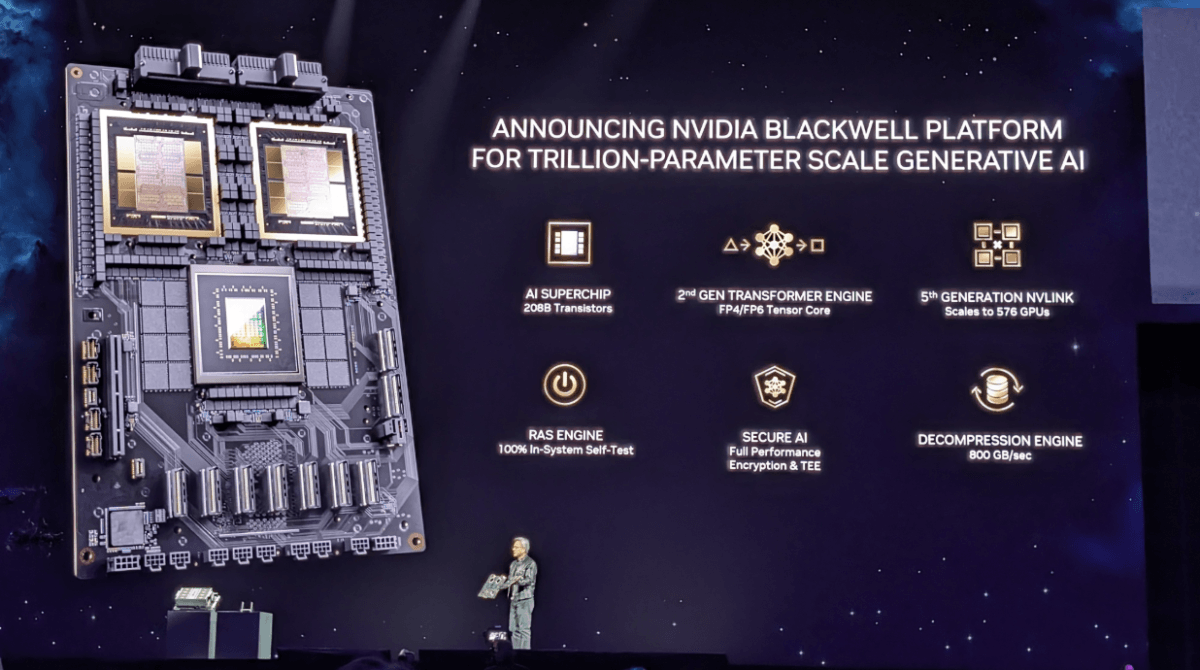
Over the past two years, much of the discussion around AI infrastructure has centred on training increasingly large foundation models. At GTC 2024, Jensen Huang used the example of training a 1.8 trillion parameter GPT model to demonstrate why AI infrastructure was evolving towards thousands of GPUs connected through high-bandwidth fabrics.
Today’s picture looks different. As AI applications move into production, the focus is shifting towards continuous inference. AI factories are increasingly designed to generate tokens at scale, serving applications, agents and end users around the clock rather than supporting one-off model training exercises.
Inference happens continuously, and that changes both the economics and the infrastructure requirements.
Access is becoming as important as architecture
One of the more interesting aspects of NVIDIA’s announcement is that it is not centred on a new GPU.
Instead, NVIDIA has introduced a commercial model designed to help AI cloud providers finance and deploy large-scale GPU infrastructure more quickly. Partners such as Sharon AI and Firmus are already building AI factories around this approach, with deployments measured in tens of thousands of Blackwell GPUs and hundreds of megawatts of power capacity.
The objective is straightforward: reduce the barriers that have traditionally slowed infrastructure deployment.
Rather than requiring every AI company to build and finance its own infrastructure from scratch, the model allows organisations to consume NVIDIA-powered compute through specialist AI cloud providers that are purpose-built for AI workloads.
For many organisations, access to compute may now become a bigger competitive advantage than ownership of the infrastructure itself.
AI infrastructure is becoming a service
This announcement also reinforces another trend we’ve been watching across the market.
Increasingly, AI infrastructure is being viewed less like a traditional data centre and more like a production platform. The value comes from keeping systems highly utilised, supporting a mix of customers and workloads, and continuously generating useful output.
That aligns closely with NVIDIA’s own definition of an AI factory: infrastructure that converts power and data into tokens. The commercial model announced this week reflects that thinking. Revenue is increasingly tied to utilisation rather than simply shipping hardware.
What it means for enterprise organisations
For most enterprises, this announcement is unlikely to change infrastructure plans overnight. Many organisations will continue to deploy AI workloads on-premises, particularly where data sovereignty, latency or regulatory requirements make cloud less suitable.
However, the announcement does reinforce an important architectural principle.Infrastructure decisions should increasingly be based on how workloads are expected to evolve, rather than today’s immediate requirements.
Some workloads will justify dedicated infrastructure. Others may be better suited to specialist AI cloud providers. Many organisations will ultimately operate a combination of both. The challenge is understanding where those boundaries sit.
The underlying trend remains the same
While the commercial model is new, the direction of travel is familiar. NVIDIA continues to build an ecosystem where compute, networking, software and cloud infrastructure operate as a single platform rather than isolated technologies.
Whether organisations consume AI through AI clouds, deploy DGX systems on-premises, or build their own AI factories, the architectural principles remain remarkably consistent. Understanding workload behaviour, selecting the appropriate infrastructure and designing for long-term scalability remain the foundations of successful AI deployments.
Looking ahead
For organisations building AI capability today, infrastructure planning is becoming just as important as hardware selection.
As NVIDIA continues to expand both its technology roadmap and its commercial ecosystem, the organisations that benefit most are likely to be those that understand not just what infrastructure is available, but which architecture best matches the workloads they are trying to run.
If you’re planning AI infrastructure, whether that’s an on-premises deployment, an AI factory, or a hybrid approach, we’re always happy to talk through the architectural options. Get in touch with the Vespertec team to discuss the right approach for your workloads and long-term plans.
