NVIDIA CEO Jensen Huang’s keynote at GTC Berlin covered a lot of ground, from the company’s growing investment in Europe’s AI ecosystem to the next generation of Vera Rubin hardware. But for those of us working in AI infrastructure, one announcement stood out: NVIDIA’s DSX Pod, and what it could mean for how quickly organisations can bring AI factories into operation.
Over the past few years, NVIDIA has made enormous progress in GPU performance. At GTC Berlin today, CEO Jensen Huang highlighted how AI computing performance has improved by a factor of around one million over the past decade. The hardware roadmap continues to move at an extraordinary pace. Blackwell delivered a significant step forward from Hopper, and Vera Rubin is now taking that architecture further, bringing improvements across compute, memory, networking and power efficiency.
But as we’ve discussed in previous blogs, building an AI factory involves much more than selecting the latest GPUs.
The reality is that organisations can invest millions in accelerated computing infrastructure, only to spend months getting it installed, connected, tested and ready to run workloads. During that time, the equipment is consuming capital without producing anything useful.
This is where NVIDIA’s latest announcements become particularly interesting. The focus is increasingly shifting from how much compute can be delivered to how quickly that compute can become productive.
DSX Pod: An AI factory that arrives ready to deploy
Traditionally, deploying a large GPU cluster involves bringing individual racks, networking equipment and associated infrastructure into a data centre, then spending considerable time connecting, configuring and validating everything on-site.
Anyone who has worked on a large infrastructure deployment will understand how complicated that process can become. Thousands of cables need to be installed correctly, networking must be configured, cooling and power requirements need to be validated, and the entire system has to be tested before workloads can begin running.
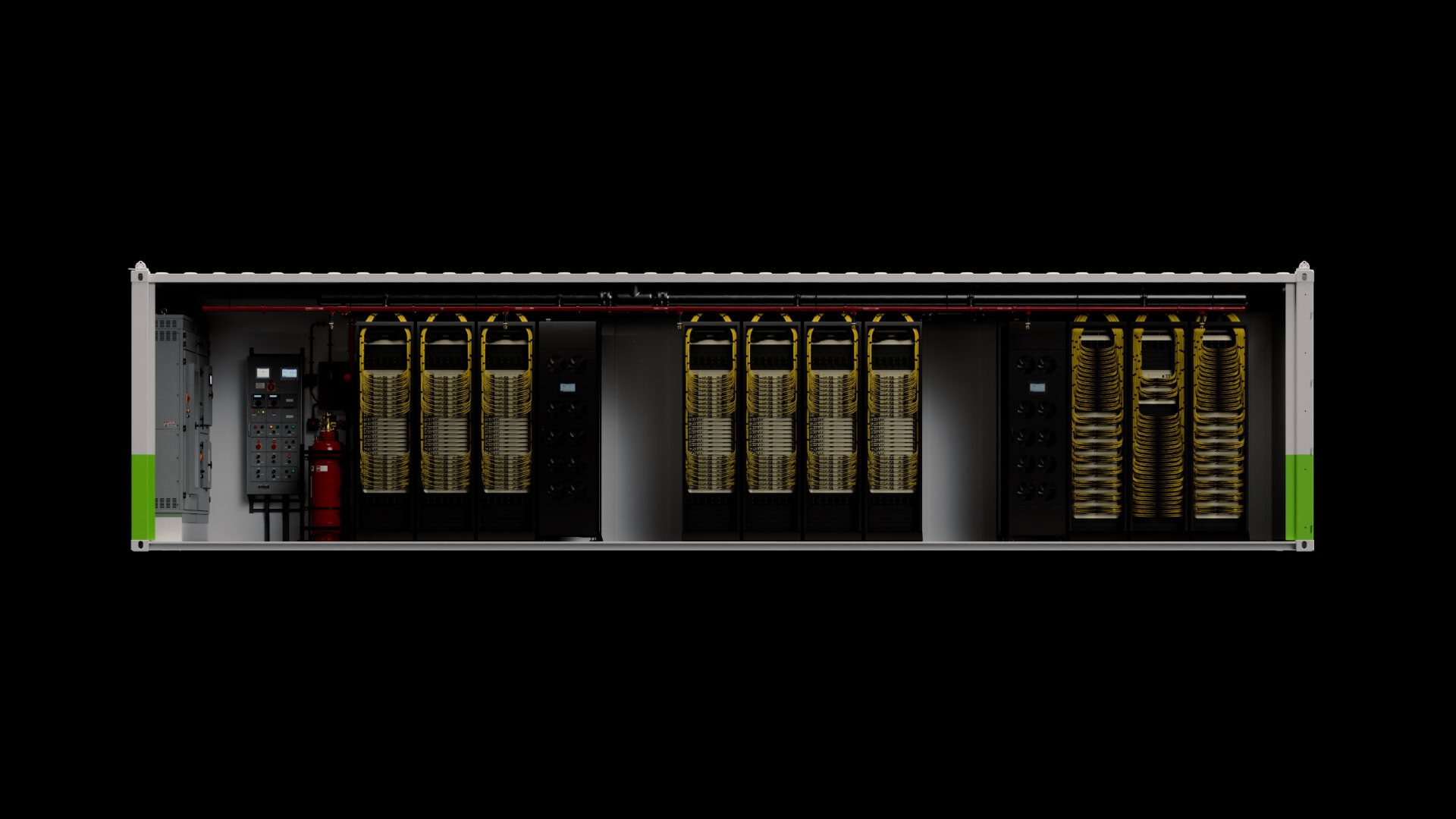
NVIDIA’s DSX Pod changes where much of that work happens. The system brings together seven liquid-cooled Vera Rubin compute racks, interconnected using approximately 17 kilometres of Spectrum-X cabling. Rather than completing all that integration at the customer site, the pod is assembled, connected, qualified and tested within NVIDIA’s supply chain.
The intention is to deliver a functioning system that can be brought into operation much more quickly once the receiving data centre has the necessary power and cooling infrastructure in place. During the keynote, NVIDIA suggested this approach could reduce deployment timelines from several months to just days.
That’s a significant change when you consider the value of the equipment involved. Every week a GPU cluster spends waiting to become operational is another week before it can begin generating tokens or delivering a return on that investment. It’s a shift towards measuring AI infrastructure by time to first token, rather than simply time to delivery.
Of course, a factory-integrated pod doesn’t eliminate the need for infrastructure planning. Data centres still need to accommodate the system’s power density, cooling requirements and networking connections. Those decisions need to be made well before the equipment arrives. But moving more of the assembly and validation process into a controlled environment could significantly reduce the work required on-site.
Vera Rubin: Designing the complete system
The DSX Pod also reflects a broader change in NVIDIA’s approach to infrastructure design.
We’ve already seen this with the GB200 and GB300 NVL72 platforms, where GPUs are connected through NVLink to operate as a much larger compute resource. Vera Rubin continues that direction, with improvements across compute, memory, networking and power efficiency.
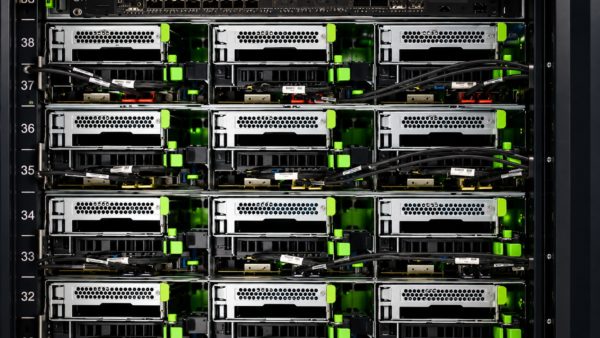
During the keynote, Jensen demonstrated the platform’s increasingly modular design, including compute sleds that bring together Vera CPUs and Rubin GPUs. One detail that stood out was the reduction in assembly time, from approximately two hours per node to less than five minutes.
That might sound like a relatively small engineering improvement compared with the performance figures being discussed, but consider what happens when that improvement is repeated across hundreds or thousands of nodes.
Assembly time, serviceability and component replacement all influence how efficiently infrastructure can be deployed and maintained. As compute density increases, the supporting infrastructure needs to evolve alongside it. Power distribution, cooling and networking all determine how much useful computing capacity can be delivered within a given data centre footprint.
Europe’s growing AI infrastructure ecosystem
Beyond the hardware announcements, Jensen also highlighted NVIDIA’s growing investment in Europe. He said NVIDIA had invested nearly $10 billion across Europe over the past year, alongside announcing investments in 14 startups during the European trip.
These figures build on the momentum we discussed ahead of GTC Berlin, when we looked at how European AI infrastructure projects announced at GTC Paris were beginning to move into operation.
For Europe, the opportunity now is to connect that growing capacity with the research, engineering and industrial expertise already established across the region.
What this means for infrastructure buyers
Looking across the announcements, there’s a consistent theme. NVIDIA is continuing to increase the performance of its hardware, but it’s also addressing the practical challenges involved in turning that hardware into working infrastructure.For organisations planning their own deployments, that’s an important distinction.
A system that offers excellent theoretical performance but takes months longer to bring online may not be the most economical option. Equally, not every organisation needs an NVL72 system or a factory-integrated pod. The right architecture still depends on the workload, budget, deployment environment and how the system is expected to grow.
These are the conversations we have with customers every day. Understanding the workload, selecting compatible platforms and validating systems before deployment all help reduce the risk of committing to infrastructure that doesn’t fit the job.
If there’s one takeaway from GTC Berlin, it’s that the next phase of AI infrastructure won’t be measured by GPU performance alone. Time to first token, deployment efficiency and the cost of producing useful AI output are becoming just as important.
If you’re evaluating NVIDIA’s latest platforms or planning an AI infrastructure deployment, get in touch with our team to discuss the architecture and practical requirements.