
AI & High Performance Computing
AI and HPC environments can vary enormously in scale, from a single workstation through to large clusters supporting research, engineering and AI workloads.
The reality is that successful deployments are rarely just about compute. Storage, networking, power, cooling and software all need to work together, and the bigger the environment becomes, the more important those relationships become.
As an NVIDIA Elite Partner for Compute and Networking, we can help you design infrastructure around the workload itself, balancing performance, operational requirements and long-term scalability across the wider platform.
More Than Just Compute
When people think about AI infrastructure, they often start with the GPUs. In practice, the surrounding infrastructure plays an equally important role. The network has to move data efficiently between systems.
Storage needs to feed expensive GPU resources fast enough to keep them utilised. Power and cooling requirements need to be understood long before equipment arrives on site.
For most organisations, the challenge is less about choosing a specific server and more about understanding how the wider environment needs to fit together.

AI Factories
As AI environments grow, they increasingly start to resemble what NVIDIA refers to as AI factories: integrated environments where compute, storage, networking and software work together as a single system.
If you’d like to explore this in more detail, we’ve created a dedicated NVIDIA microsite covering AI factories, NVIDIA architectures, reference platforms, networking, storage, cooling and the practical considerations involved in deploying AI infrastructure.
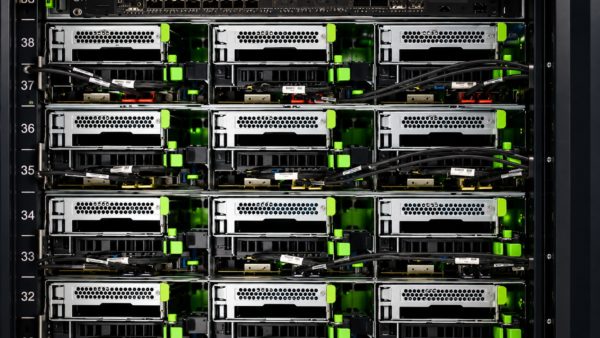
These environments can range from relatively modest deployments through to rack-scale platforms such as NVL72 and SuperPOD. The technology changes quickly, but the principle remains the same: every component needs to be designed around the workload it supports.
Our role is to help organisations understand those trade-offs early, before decisions around infrastructure, facilities and procurement become difficult to change.

Power and Cooling
One of the biggest changes in AI infrastructure over the last few years has been the rise in power density.
Modern GPU platforms can consume significantly more power than traditional server environments, bringing new demands around rack design, power delivery and cooling.
As a result, technologies such as direct liquid cooling are becoming increasingly common, particularly in larger AI deployments. Whether you’re planning for air-cooled systems today or evaluating liquid-cooled infrastructure for the future, these considerations are often easier and more cost-effective to address early in the process.

AI and Traditional HPC
While AI is driving much of the current demand for high-performance infrastructure, traditional HPC remains an important part of the landscape.
Many research, engineering and scientific workloads continue to run on large CPU-based environments, while others have been adapted to take advantage of GPU acceleration. In practice, most organisations are somewhere between the two.
The right approach depends on the applications being used, the skills available internally and the outcomes the organisation is trying to achieve.

Platforms and Ecosystems
Every organisation will have its own requirements around performance, procurement, support and standardisation.
We work across a broad ecosystem of infrastructure vendors, including NVIDIA-certified systems, DGX platforms, HGX architectures, workstation platforms and rack-scale deployments from partners such as Supermicro, Lenovo, Gigabyte, Dell, Kaytus and HPE.
Because we’re not tied to a single hardware platform, we can focus on identifying the right solution for the environment rather than forcing a particular vendor approach.

Talk to Us
Whether you’re exploring AI for the first time, expanding an existing HPC environment or planning a large-scale AI factory, we can help you understand the infrastructure decisions involved.
Our approach is practical, consultative and grounded in real-world deployment experience. We work closely with customers, vendors and technology partners to understand the requirement, explore the options and build an architecture that fits.